


Reflections from Manzanar
By Neptoune Nilofar Amin, Refugee Programs Director
August 2026
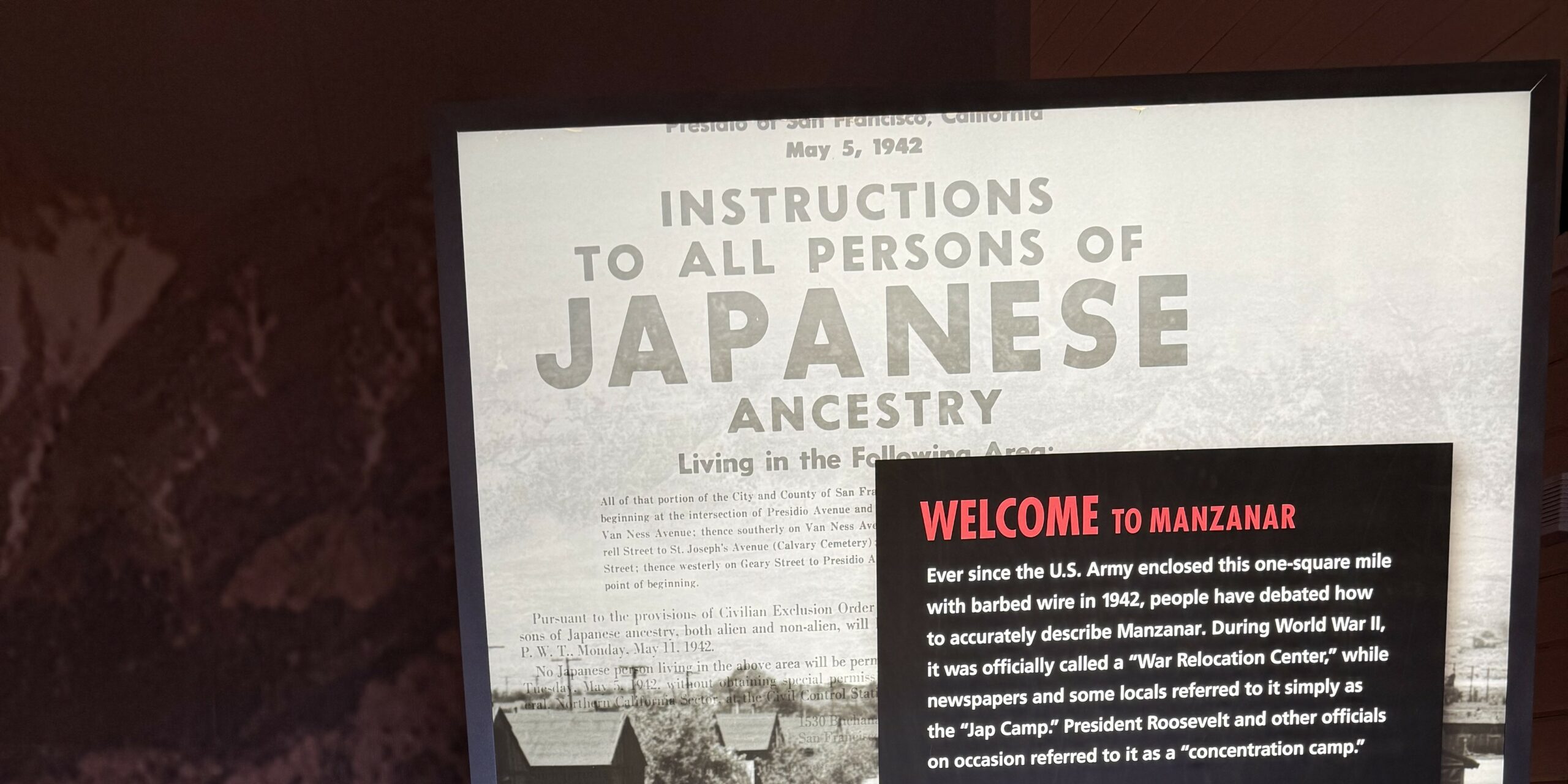
This spring, I had the privilege of joining the annual pilgrimage to Manzanar alongside community members, descendants of those incarcerated there, and survivors who shared their personal stories. During World War II, more than 120,000 people of Japanese ancestry—most of them U.S. citizens—were forcibly removed from their homes and incarcerated in camps across the country. Throughout the experience, I couldn’t help but see parallels in what our country is facing today.
The Manzanar National Historic Site, located in California's Owens Valley, was one of ten such camps and imprisoned more than 10,000 people between 1942 and 1945. Each year, the pilgrimage offers an opportunity to remember this history, honor those who endured it, and reflect on the lessons it continues to hold for us today.
Visiting Manzanar was one of the most emotional experiences I have had in a long time. Walking through the site and seeing where thousands of Japanese American families were forced to live during World War II was powerful, but it was the stories of the survivors that truly stayed with me.
As I listened to survivors share their parents' experiences, I found myself unable to hold back tears. Hearing about families who lost their homes, their freedom, and their sense of security was heartbreaking. One story that especially touched me was about the orphaned children who were sent to Manzanar. These children were already navigating life without their parents, and then they were forced to live behind barbed wire, far from the support and stability every child deserves. Thinking about what they endured brought me to tears.
The visit also made me reflect on the work we do with refugees and immigrants facing potential detention in the present day. Although their stories are different, I saw many similarities—families forced to leave everything behind, people living with uncertainty and fear, and the challenge of starting over in a place that does not always welcome them. Yet, just like the families at Manzanar, I continue to see incredible resilience, strength, and hope in the people we serve.
What I will remember most about Manzanar is not only the injustice that took place there, but also the humanity of the people who endured it. Despite everything they faced, they built community, supported one another, and persevered. Their stories are a reminder that history is not just something we learn about—it is something we must learn from.
Leaving Manzanar, I felt both heartbroken and inspired. Heartbroken as our nation faces another harrowing era in immigration history. And inspired to carry with me a deeper appreciation for the importance of dignity, belonging, and standing up for one another. As someone who works alongside refugee families every day, I left with a renewed commitment to ensuring that every person is treated with compassion, respect, and the opportunity to belong.
Want to read about our CEO's experience at Manzanar last year? Click here.